

Trials with ozone treatment have demonstrated up to a 98% reduction in bacterial activity in RAS facilities. In 2026, OxyGuard focused on turning ozone research into controlled, measurable and practical water treatment for commercial aquaculture.
A strong focus for the OxyGuard Group this year has been to turn several years of ozone research into water treatment systems that are easier to use, monitor and control in working hatcheries and RAS facilities.
The aim is cleaner water, but it is still important not to treat ozone as a one-size-fits-all technology.
For hatcheries, that is highly relevant. Eggs, larvae and juvenile fish depend on stable water conditions, and microorganisms and organic matter can enter or accumulate at several points in the system. Treatment can be placed where it creates the greatest value for the individual facility, but incoming water is an obvious place to start, because part of the microbial load can be reduced before the water enters the production system.
But can ozone effectively reduce bacterial activity? And can it be done under safe and controlled conditions?
A stronger case for bacterial control
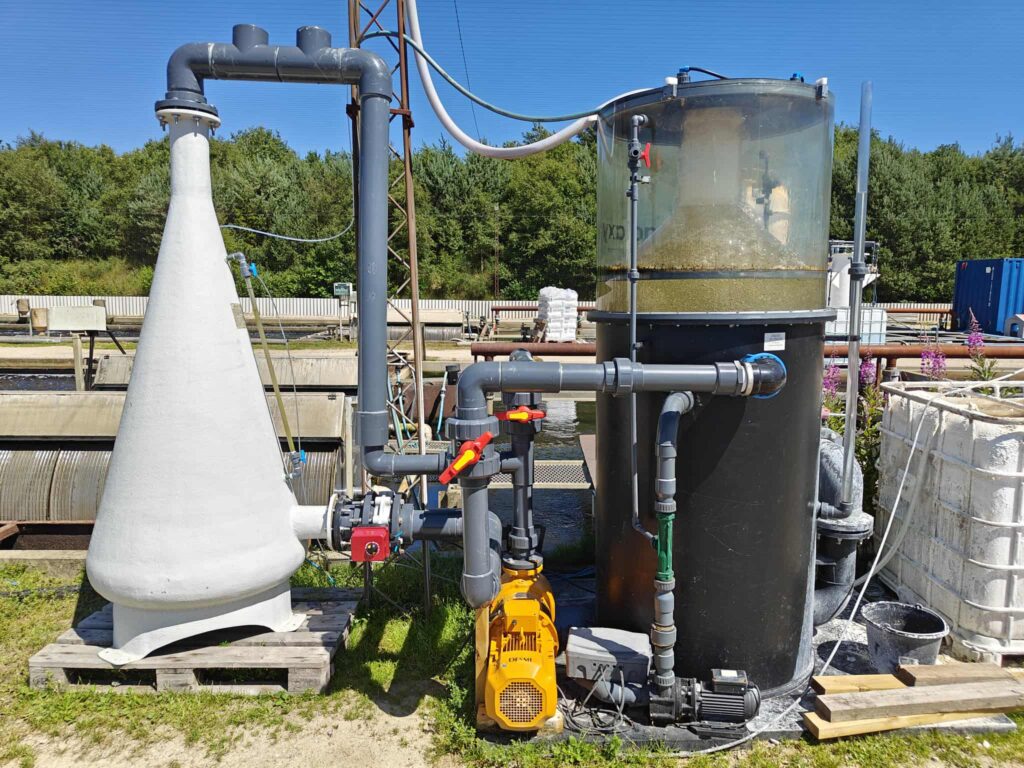
BIZON is a research collaboration between DTU Sustain, part of the Technical University of Denmark, Danforel and OxyGuard International. The trials were conducted at Nørre Vium Trout Farm in Denmark under commercial freshwater RAS conditions. Lasse Polke-Pedersen, Industrial PhD student at OxyGuard, worked on the ozone trials and the analysis of water quality and bacterial activity.
BactiQuant was used as an indicator of total bacterial activity. In the first set of trials, the ozone-treated protein skimmer configuration achieved an average reduction of 98.1% in bacterial activity relative to influent conditions, while the Vacuum Airlift (VAL) configuration achieved 80.7%.
The trials showed that ozone did more than improve water clarity. Under the tested conditions, it also reduced bacterial activity in the production water.
Later trials looked more closely at what affects the result. Four treatment configurations were compared at ozone doses of 0, 1 and 2 mg/L: a protein skimmer, a VAL, an oxygen cone and an oxygen cone followed by a protein skimmer. Higher ozone doses generally produced greater reductions in bacterial activity. Treatment performance also varied with the contact technology and the timing of treatment in relation to feeding. The final BIZON results will be presented in a scientific paper scheduled for later in 2026.
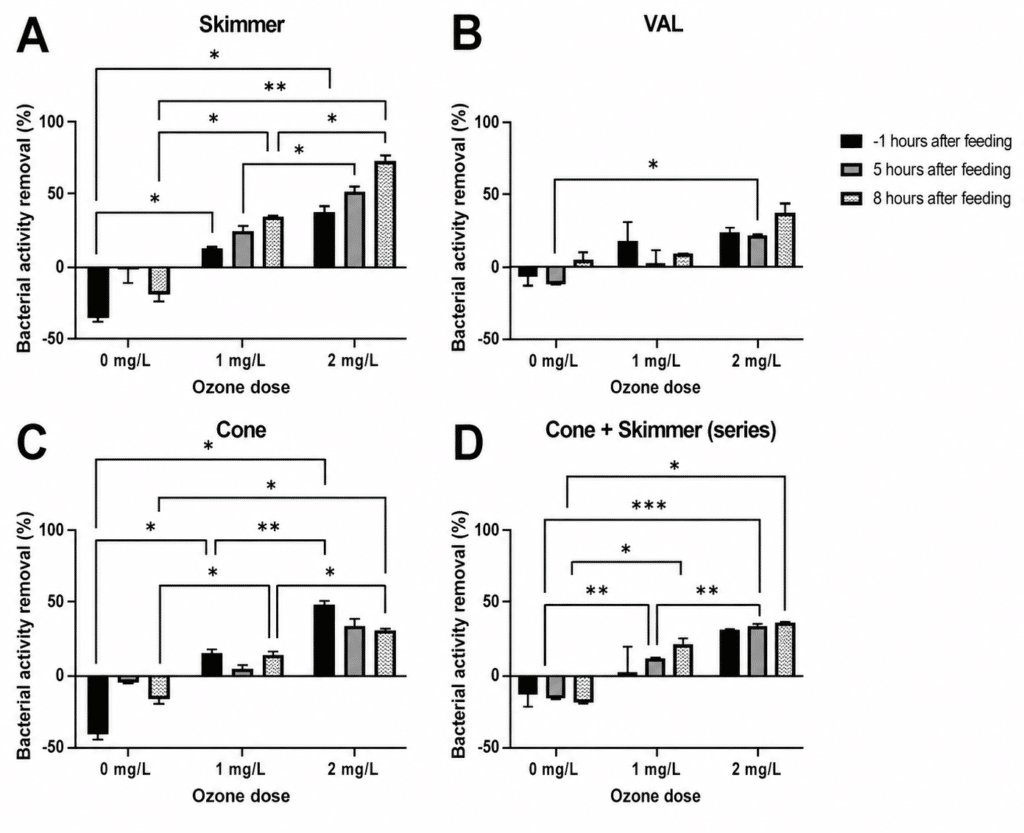
The trials showed that more ozone is not automatically better. Water composition, organic load, contact method, dose and timing all affect the result. At the highest dose levels, the additional benefit began to level off.
Reducing the bacterial pressure
A 98% reduction in bacterial activity can make a real difference. For hatcheries, lower microbial pressure means less biological load reaching eggs, larvae and juveniles. In RAS, it can help keep production water cleaner without removing the microbial processes the biofilter depends on. For grow-out RAS, ozone can also reduce off-flavour compounds such as geosmin, greatly reducing or even eliminating the need for costly purging before harvest.
That balance is important. The BIZON trials measured overall bacterial activity, not individual pathogens, and the aim was not sterile water. The trials showed that ozone treatment could reduce bacterial activity while maintaining biofilter performance.
Where you place the treatment is also important. For hatcheries, treating incoming water can create an early barrier before water reaches sensitive life stages. In other systems, ozone may be more useful elsewhere in the treatment loop.
Ozone can also work alongside filtration, UV and biological treatment. The water source, organic load, flow and production design determine the most useful setup.
Ozone as a solution for saltwater
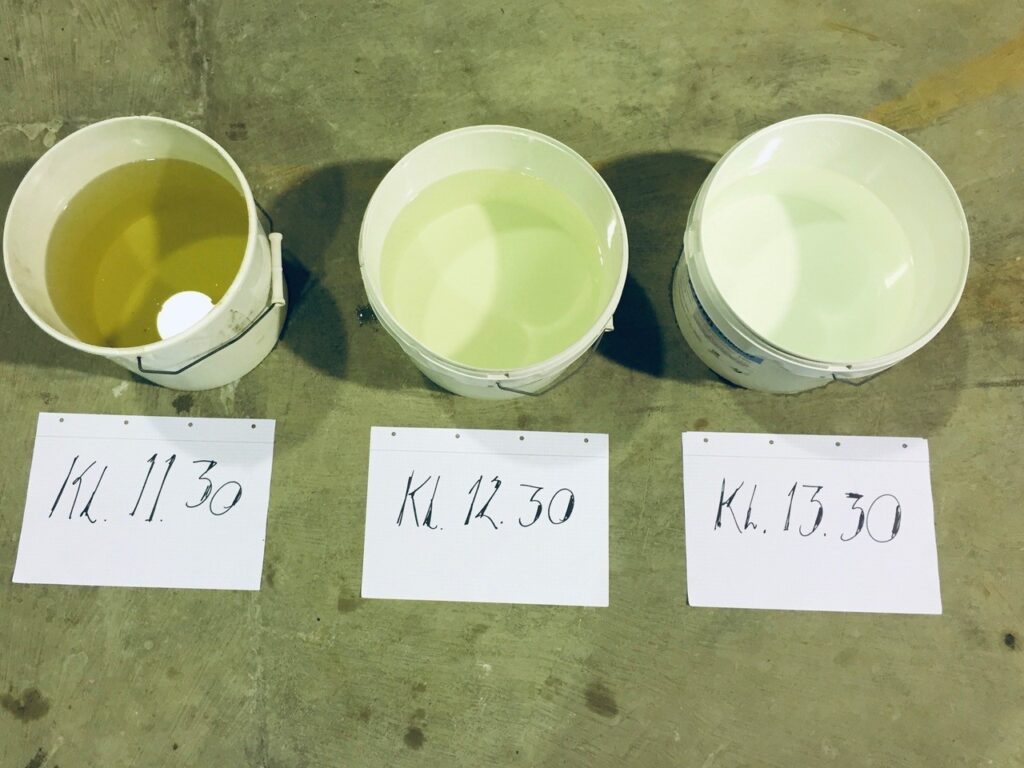
Ozone behaves differently in saltwater. Seawater contains more bromide, which can react with ozone and form reactive bromine compounds such as hypobromous acid. RASALT showed that the safe ozone dose depends on the organic matter in the individual water matrix.
That knowledge has since moved into commercial use. Today, ozone systems from Water ApS, which is a part of the OxyGuard Group, are operating at large saltwater facilities in Denmark. For marine hatcheries and RAS producers, saltwater is therefore not a barrier to ozonation. It does, however, require treatment designed and controlled for saltwater conditions.
With the right dose and control, RASALT showed that higher ozone doses could be used under the tested conditions without HOBr formation.
Keep ozone under control
Ozone needs to do its job during the treatment process, and only there. It has to be consumed before the treated water reaches the fish tank. When ozone reacts with bacteria and organic matter, it reduces bacterial activity and oxidizes organic compounds, while the ozone itself is consumed in the process. Any residual ozone left in the water needs to be detected and controlled before it reaches the fish; otherwise it can be harmful to the stock.
But you do not need to monitor – or worry about – this manually. OxyGuard has developed an Ozone Sensor for this purpose and it can measure ozone concentrations down to a few micrograms per liter – and it responds very quickly to changes in the water.
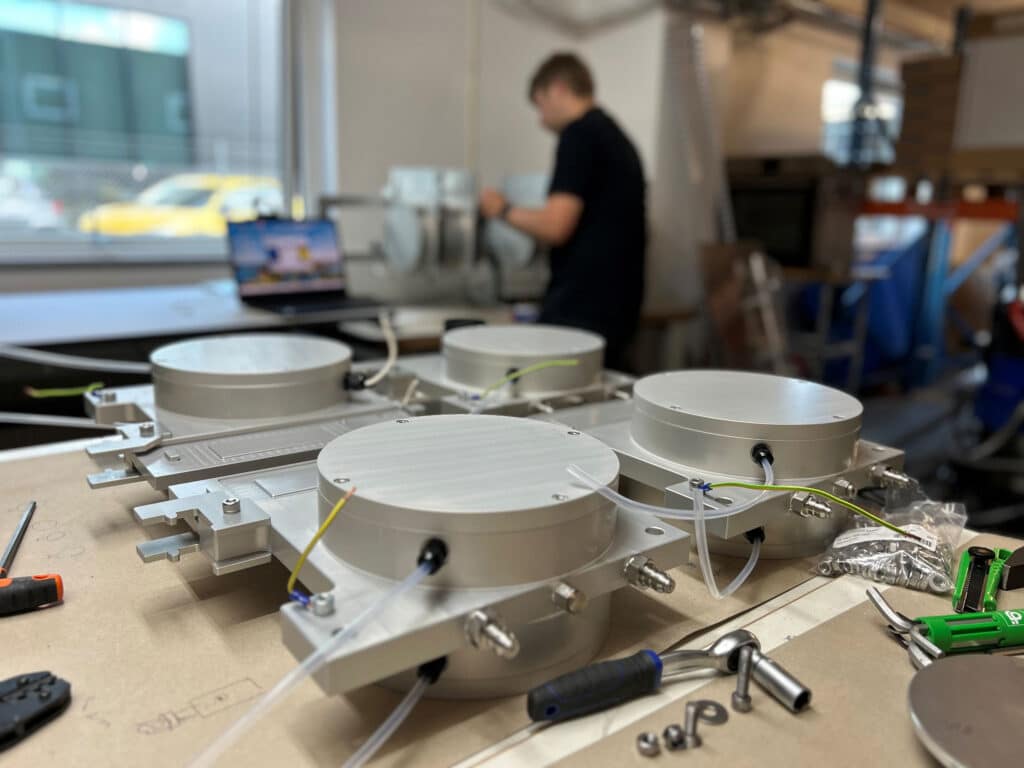
The Gaia Cabinet developed by Water ApS brings ozone generation and control together in one commercial system. The OxyGuard dissolved ozone sensor can be added to the setup, allowing residual ozone to be monitored continuously. When included, the measurements can be used by the control system to adjust ozone production automatically.
From research to a 2026 solution
The challenge has been to make ozone treatment practical in a working facility.
The results from BIZON and RASALT have helped shape how OxyGuard Group works with ozone today. In 2026, the focus has been on using that knowledge to make ozone treatment easier to monitor and control under commercial conditions.
That research is now built into a commercial solution: the Gaia Cabinet. For hatcheries and RAS facilities, it provides a practical way to reduce bacterial pressure without adding another treatment process that needs constant manual attention.
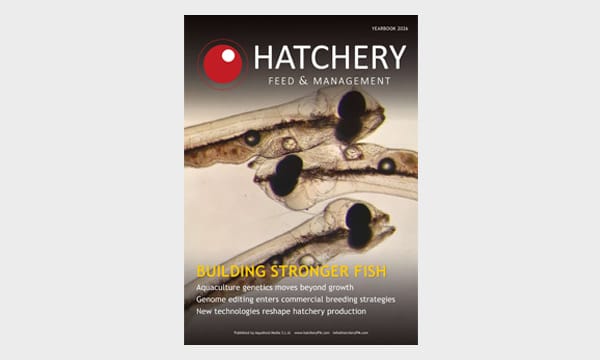
Written by Rikke Justesen, OxyGuard. Originally published in Hatchery Feed & Management, Yearbook 2026.