
You monitor your water quality all the time. Oxygen, temperature, pH, CO₂ and other key parameters tell you whether your production is within range and your fish are safe. Monitoring is essential, because it shows you what is happening now and what has already happened. It gives you valuable insight as a fish farmer.
The extra value begins when your data is connected, structured and used to support the next decision. That is where you move from observing your production to understanding patterns, spotting changes earlier and you get a better chance to act before a situation becomes critical.
That is where the shift from monitoring to control starts.
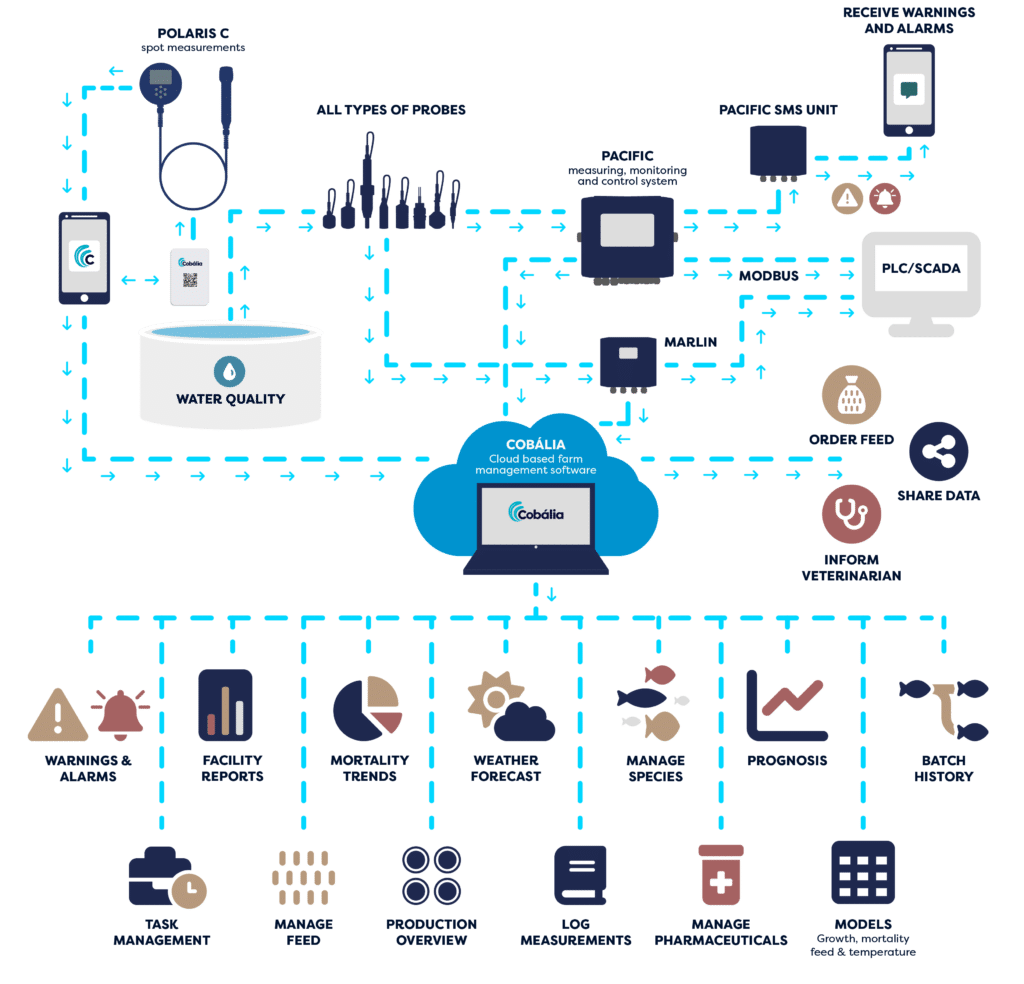
With OxyGuard equipment connected through Cobália, measurements from probes, hand-held meters and control systems like the Pacific or Marlin+ become part of a digital setup that gives you better insight and control. Instead of isolated values, manual notes or data stored in different places, you get a clear overview of your production and a stronger foundation for your decisions.
In practice, that means your data can support actions such as:
- Automated oxygen control
Your system can adjust oxygen dosing based on real-time measurements, helping you keep conditions stable instead of reacting when levels have already changed.
- Adaptive aeration
Aeration can be adjusted to the actual needs of the system, supporting water quality while helping reduce unnecessary energy use.
- Smarter feeding decisions
When feeding is supported by data from the system, decisions can move away from fixed routines and closer to what is actually happening in the water. This can help reduce feed waste and support better growth conditions.
- Predictive alarms
Instead of only warning you when a limit is reached, connected data can help identify patterns and changes earlier, giving you more time to respond before a situation becomes critical.
- Automated responses
When systems are connected, certain actions can happen automatically, supporting your staff and creating a more stable production environment. This does not replace the fish farmer’s experience. It strengthens it.
Good control gives you a better foundation for every decision, whether you are managing one tank, one site or several farms. You can compare performance, spot deviations earlier and use data from your daily operation to improve water quality, feed efficiency, energy use and fish welfare.
Moving from monitoring to control is not about making aquaculture more complicated, but the right setup gives you the possibility to make the data you already collect work harder for you.
Find all equipment here
Have questions? Fill out the form and we’ll get back to you.